

Guide:How to Find Popular Stocks?
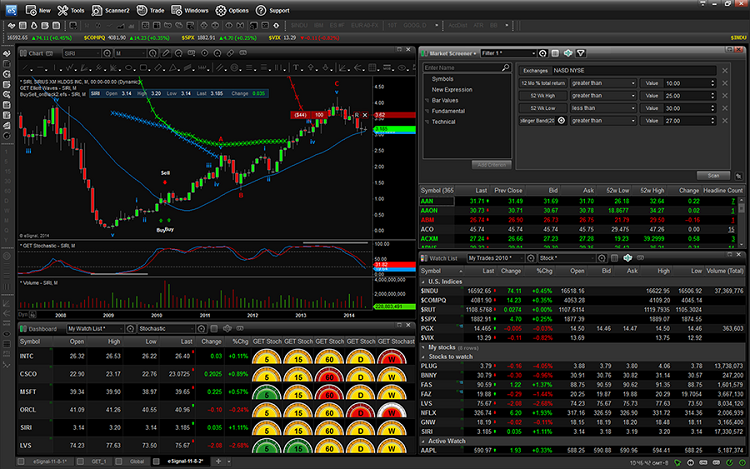
In the fast-moving world of the stock market, every investor dreams of having a “crystal ball” to lock in shares that are about to explode in value in the coming days. This isn’t magic; it is a science of information processing.
Core Concept: Information is Alpha
In the stock market, price always fluctuates around value, and information is the bridge connecting the two. Whoever interprets information the fastest and most accurately holds the “password” to short-term gains.Timely information is the ultimate edge in trading popular stock. Click hereto subscribe to our market insights.
Below, we will break down how to use different types of critical information to screen for find Popular Stocks and get Highest Growth Potential in the Coming Days?
Step 1: Macro & Industry News — Finding the Popular Stocks’ “Trend”
Macro and industry news sets the “atmosphere” for stock movements. Stocks with the highest growth potential in the coming days are often found in sectors benefiting from policy tailwinds or industry breakthroughs.
- Recent Example: The Memory Chip Price Hike — Micron & SanDisk
- Timeline: January 9, 2026 (Friday) Close
- Price Action: This week saw a long-awaited explosion in the memory chip sector. Micron Technology closed at $ 345.09, up +5.53% for the day. Meanwhile, SanDisk surged even higher, closing at $ 377.41 with a massive +12.81% gain, hitting a new historical high.
- Chart Analysis: Looking at the daily candlestick charts for these two stocks, a clear “Bullish Alignment” is visible. The price is moving up along the 5-day moving average. On January 9th, a strong “Large Yang Line” (Green Candle) shot up, breaking through the previous narrow trading range. Volume was several times higher than usual.
- Why it matters: This “Breakout Candle” is direct evidence of market funds rushing in following the industry news (SSD price hike expectations).
- Strategy: Watch for supply chain news. When industry leaders show this kind of breakout pattern,upstream and downstream stocks often move in the following days.
- [INSERT CHART: MU (Micron) & SNDK (SanDisk) Daily Chart – Jan 2026 – Showing Breakout and High Volume]
Step 2: Fundamentals — Filtering for “Popular stock”
Within hot sectors, you must filter for companies with solid fundamentals. We need “Real Gold” with actual earnings, not just “sand” hyping trends.
- Recent Example: Intel’s “Policy-Driven” Turnaround
- Timeline: January 8, 2026 (Thursday) & Beyond
- Price Action: Intel experienced volatile swings at the start of the year but began to stabilize and rebound on January 8th. It gained over 15% for the week, briefly touching $ 45.55.
- Fundamental Catalyst: This rally wasn’t pure speculation. There was concrete support: The U.S. government purchased shares in Intel (5.5% stake), coupled with Trump administration policies favoring domestic chip manufacturing.
- Chart Analysis: Looking at Intel’s weekly chart, a “Double Bottom” pattern formed at the end of 2025. In early January 2026, fueled by good news, the stock broke above the “Neckline” with heavy volume.
- Strategy: For “Comeback Stocks,” watch for changes in shareholding structure and policy backing. A breakout above key resistance (like the 60-week MA) often opens up space for the coming days.
- [INSERT CHART: INTC (Intel) Weekly Chart – Dec 2025 to Jan 2026 – Showing Double Bottom and Breakout]
Step 3: Technicals — Catching the “Ignition Point”
When macro tailwinds and solid fundamentals align, the price chart often leaves a specific “Ignition Signal.” This is the key signal for your entry timing.
- Recent Example: Tesla’s “Oversold Bounce” Signal
- Timeline: Late 2025 to Early January 2026
- Price Action: Tesla suffered a painful pullback in 2025, dropping nearly 30% from its highs. However, it found strong support in the 400−400− 410 zone.
- Technical Setup: On the daily chart, when the price hit the 200-day moving average, “Long Lower Shadow” candles appeared (indicating buyers stepping in). By January 9th, a medium-sized bullish candle formed, closing at $ 445.01, showing buyers were back in control.
- Strategy: Use technical indicators to find oversold conditions. If the RSI is below 30 and the price forms a “Morning Star” or “Hammer” pattern on the long-term MA, a bounce is likely in the coming days.
- [INSERT CHART: TSLA (Tesla) Daily Chart – Jan 2026 – Showing Support at 200-Day MA and Rebound]
Step 4: Money Flow — Following the “Big Players”
Capital is the fuel for price increases. By observing capital flow, we can judge the intentions of institutional investors (the “Smart Money”).
- Recent Example: Small-Cap Rotation — Russell 2000
- Timeline: January 2026
- Market Context: Goldman Sachs predicted a 67% surge in small-cap earnings for 2026.
- Capital Flow: Funds started rotating out of high-valuation mega-caps (like some Nasdaq 100 stocks) and into cheaper, more elastic Russell 2000 small-cap stocks.
- Strategy: Watch the volume. If a stock sees a sudden spike in “Volume Ratio” (e.g., Volume Ratio > 2 or 3) without any obvious news, it usually means institutions are quietly building positions—a signal to watch closely in the coming days.
- [INSERT CHART: IWM (Russell 2000 ETF) vs. QQQ (Nasdaq ETF) – Jan 2026 – Showing Relative Strength]
Summary & Risk Reminder
To find stocks with the highest growth potential in the coming days, you need a combination of punches:
- Macro View: Look for hard logic like memory chip price hikes or AI application rollouts.
- Fundamental Filter: Look for earnings visibility like Micron or policy support like Intel.
- Technical Trigger: Look for support at key levels (like Tesla) or breakout candles.
- Money Flow: Follow the volume and institutional money.
Finally, the most important thing:
- Timing is Everything: Market information decays rapidly. Acting late turns information into a trap.
- Nothing is Certain: Even the best analysis can be wrong.
- Strict Risk Control: Always set a stop-loss (e.g., 5%-7% below your buy price) and manage your position size. This is the last line of defense for your capital.
Timely information is the ultimate edge in trading. Click here to subscribe to our market insights.“